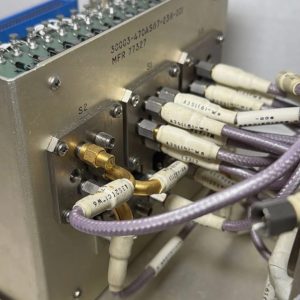
The Aviation Switching Module – NSN 4920-01-250-2696 (AS-IS / Untested) is a specialized aerospace electrical component offered for professional evaluation, restoration, testing, parts recovery, collection, or another suitable non-assumed application.
An Aircraft Switching Module may control, route, select, isolate, or distribute compatible electrical signals or circuits, while an Aerospace Switching Module should be evaluated according to its exact internal design and intended equipment relationship.
Every Aircraft Power Switching Module or Aircraft Signal Switching Module should be assessed individually because connectors, voltage, current, control logic, and system compatibility can vary significantly.
The Aviation Control Module, Aircraft Switching Unit, Aerospace Power Distribution Module, Aircraft Electrical Control Unit, Aviation Power Control Module, Aircraft Electronic Switching System, Aerospace Switching Unit, and Aircraft Electrical Module keywords describe a broad aerospace-electrical product category.
Overview of the Aviation Switching Module
Accurate NSN verification helps reduce purchasing errors and prevents an unrelated module from being represented as compatible equipment.
Complete identification increases the value of the Aviation Switching Module for restoration, research, inventory management, or component evaluation.
AS-IS Aerospace Equipment Considerations
The condition description should be understood as a limitation rather than a suggestion that the unit is probably operational.
An untested component should not be connected directly to aircraft wiring, expensive test equipment, batteries, laboratory supplies, or unknown power sources.
Evaluating Aircraft Switching Functions
The actual role depends on internal circuitry, switch configuration, connector pinout, associated system design, and technical documentation.
Missing knobs, guards, labels, connectors, covers, or fasteners may reduce completeness.
Aerospace Switching Module Construction
An Aerospace Switching Module may use a durable enclosure, secure connectors, internal wiring, switches, relays, terminal assemblies, circuit boards, or other configuration-specific components.
Protective caps should remain installed during storage and shipping when available.
Aircraft Electrical Switching Module Inspection
A burnt odor, melted material, soot, or arcing marks should be disclosed clearly.
Methodical inspection protects the integrity and research value of the Aircraft Electrical Switching Module.
Aviation Module Interface Considerations
The module may interact with relays, switches, indicators, sensors, power sources, test connections, or other control equipment.
High-resolution photographs can preserve readable details before cleaning or restoration.
Power Switching Module Inspection
A switch that moves normally may still contain burned, corroded, welded, or high-resistance electrical contacts.
Missing covers or barriers may expose conductive points and increase handling risk.
Aerospace Electrical Control Unit Evaluation
Visual inspection, continuity checks, insulation review, component identification, and controlled testing may form part of a professional evaluation.
Detailed records support the long-term value of the Aerospace Electrical Control Unit.
Maintaining Aircraft Interface Hardware
An incorrect connection may damage sensitive electronics even when the module itself receives little power.
Shielding, grounding straps, connector shells, cable clamps, and enclosure bonding can influence signal performance where included in the original design.
Aviation Control Module Applications
A module removed from its original system can be difficult to test without supporting equipment and documentation.
Compatibility should be verified through NSN, part number, manufacturer, connector layout, revision level, modification status, and equipment application.
Aircraft Switching Unit for Maintenance or Restoration
An Aircraft Switching Unit offered AS-IS may appeal to aviation workshops, military-equipment collectors, technical schools, restoration specialists, and organizations maintaining legacy support equipment.
Responsible educational use can extend the value of the Aircraft Switching Unit.
Aerospace Power Distribution Module Considerations
An Aerospace Power Distribution Module generally manages or routes electrical power among compatible circuits, although the exact function of this NSN should not be assumed without supporting information.
Bent brackets, enlarged holes, missing fasteners, or distorted mounting surfaces may complicate restoration.
Maintaining Legacy Aviation Control Equipment
Documented condition improves confidence among buyers of legacy Aircraft Electrical Control Unit equipment.
Limited testing should not be described as complete serviceability verification.
Choosing an Aviation Power Control Module
Responsible product information protects buyers seeking an Aviation Power Control Module.
Safe handling is important even when the Aviation Power Control Module is sold strictly AS-IS.
Understanding an Aircraft Electronic Switching System
A systems approach supports more accurate troubleshooting and restoration.
A replacement AS-IS unit may provide useful comparative parts but should not be installed without evaluation.
Long-Term Storage of Aircraft Electronics
Connector caps should remain fitted, and the module should be supported without placing pressure on switches, knobs, cables, or mounting brackets.
Loose accessories should be wrapped separately and inventoried before packaging.
Commercial Inspection of an Electrical Module
An Aircraft Electrical Module should be purchased according to exact identity, intended use, condition, completeness, technical support, testing requirements, and available documentation.
Remote buyers should request current photographs of the actual unit instead of relying on catalog images or pictures of similar equipment.
Aerospace Module Pre-Purchase Inspection
A pre-purchase review should confirm the NSN, manufacturer, part number, serial number, markings, enclosure condition, connectors, switches, included accessories, storage history, modification status, and known application.
- Resolve identity, configuration, application, and package-completeness questions before payment.
- Inspect the enclosure for dents, cracks, corrosion, missing screws, altered holes, broken seals, damaged brackets, and signs of previous opening.
- Confirm the written invoice, AS-IS terms, payment protection, packaging method, shipping insurance, inspection period, and return conditions.
Testing the Aviation Switching Module
A methodical process reduces the risk of damaging rare aviation equipment.
Partial operation should not be presented as complete certification, calibration, or airworthiness.
Repairing Legacy Aviation Control Hardware
Original labels, wiring routes, fasteners, finishes, and component locations should be preserved whenever practical.
Accurate records support get more info future maintenance and responsible resale.
Final Thoughts on the Untested Aircraft Switching Module
The Aviation Switching Module – NSN 4920-01-250-2696 (AS-IS / Untested) can provide restoration, research, parts, training, collection, or professional evaluation value when its identity and condition are understood clearly.
An experienced aviation-electronics technician should assess the module before it is powered, installed, or connected to other equipment.
Whether buyers need an Aircraft Power Switching Module, Aerospace Electrical Control Unit, Aircraft Signal Switching Module, or Aviation Control Module, electrical specifications should be verified before testing.
With verified identity, careful inspection, protected storage, safe bench procedures, organized documentation, and qualified technical review, the module can provide lasting specialist value.